
- Psychologist-Led ADHD Coaching
ADHD Coaching in Melbourne, Built Around How Your Brain Works
- No referral or diagnosis needed to start
- Telehealth, or in person in Malvern East and Kew
- Strengths-based and non-judgemental, alongside clinical care if you need it
Knowing What to Do Isn't the Hard Part
For a lot of adults with ADHD, the gap is between knowing and doing. It's not a character flaw or a lack of effort. It often looks like this.
Starting is the hardest part
Proper time for assessment and to nurture the relationship that good care depends on.
Time slips away
Care grounded in current evidence and professional best practice.
Systems don't stick
Autism and ADHD are understood as differences to be accommodated and supported, not as problems to be fixed.
Overwhelm builds up
People of all backgrounds, identities and life stages are welcome, and care is offered with respect and without judgement.
Focus lands in the wrong place
Life admin piles up
Bills, forms and emails can sit untouched, even when they’d only take a few minutes.
What We Work On Together
Coaching is practical and action-focused. Together you build strategies and systems, test them in real life, and keep them going with accountability.
We support people with study, work and career, home and family admin, and adults who’ve recently been diagnosed and want to know what to do next.
- Time management and procrastination
- Following through
- Managing distraction
- Handling overwhelm
- Getting started on tasks
- Prioritising
- Work or study without burning out
- Routines and habits

Meet Our Psychologists
Your care is provided by AHPRA-registered psychologists with experience across different areas of psychological assessment and treatment.
Dr Claire Lubotzky
Clinical Psychologist
DPsych (Clin) | PGDipPsych | GradDipPsych | BA (Econ & Soc Sci) | MAPS | CCLP | AHPRA Registered
Dr Claire Lubotzky is a Clinical Psychologist with experience supporting people through perinatal and infant mental health concerns, parent-child relationships, neurodiversity, mood and anxiety difficulties, complex developmental trauma, performance concerns and significant life transitions.
Her work considers the broader circumstances that may be affecting how you are feeling and functioning, including relationships, developmental experiences and periods of change. She works with people to better understand what is happening and develop practical ways forward that are suited to their circumstances.
Dr Claire holds a Doctorate in Clinical Psychology and is registered with the Australian Health Practitioner Regulation Agency (AHPRA).

Rebecca Sion
Clinical Psychologist
MClinPsych | GradDipPsych | BAppSc (Health Prom) | MAPS | AHPRA Registered
Rebecca Sion is a Clinical Psychologist at Evallies in Melbourne, holding a Master of Clinical Psychology, Graduate Diploma of Psychology, and Bachelor of Applied Science (Health Promotion). She is a member of the Australian Psychological Society and registered with AHPRA.
With more than a decade of experience across public mental health services and private practice, including work with Queensland Health in Alcohol and Drug Services, Community Care Units, and Acute Care, Rebecca brings a strong grounding in both everyday and complex presentations. She works with adults, offering trauma-informed, relational and integrative therapy that draws on somatic and nervous-system-focused approaches alongside evidence-based methods such as EMDR, CBT, ACT, Solution Focused Therapy and mindfulness practices.
Rebecca’s areas of focus include trauma and complex trauma, anxiety and depression, substance use, nervous system regulation, and stress and life transitions.

Brenda Taylor
Clinical Psychologist
MPsych(Couns) | GradDipPsych | BA(Psych) | Board-approved Supervisor | AHPRA Registered
Brenda Taylor is a Clinical Psychologist at Evallies in Melbourne, holding a Master of Psychology (Counselling), Graduate Diploma of Psychology, and Bachelor of Arts (Psychology). She is registered with AHPRA with an area of practice endorsement in clinical psychology, and is a Psychology Board of Australia approved supervisor.
Brenda has worked in private practice since 2010, alongside roles as a school psychologist, at headspace with young people aged 12 to 25, and in a community health perinatal program supporting parents of infants. She works with children, adolescents and adults, offering strength-based, collaborative therapy that draws on evidence-based approaches adapted to each person’s age, circumstances and the way they learn best. Where it helps, she works alongside parents, schools, paediatricians and psychiatrists so everyone is working to the same plan. Brenda has also taught psychology at university level for more than a decade, and brings that focus on clear explanation into her sessions and assessment reports.
Brenda’s areas of focus include ADHD and neurodivergence, trauma, anxiety and depression, social and interpersonal difficulties, adjustment and life transitions, and cognitive, educational and functional assessments for children and young people.
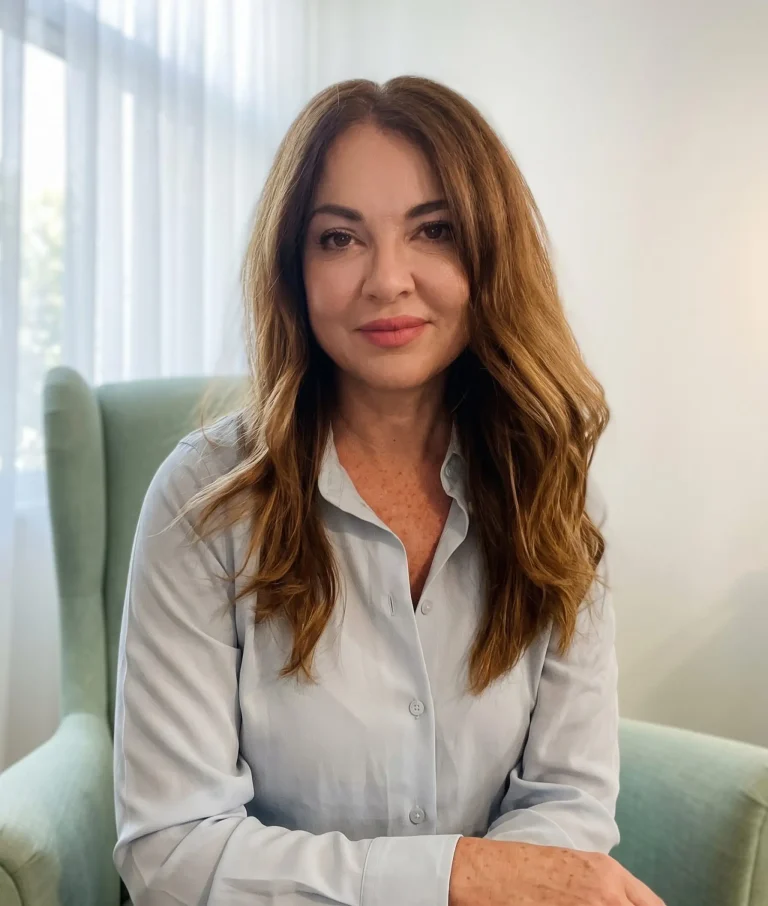
Toneya Young
Couples Therapist & Psychologist
AHPRA registered General Psychologist | LLB | GradDipLegalPrac | GradDipPsychSc | GradDipPsych(Adv) | DipPsychPrac
Toneya Young is a Psychologist at Evallies in Melbourne. She holds a Graduate Diploma of Psychology (Advanced) and a Graduate Diploma of Psychological Science from Deakin University, and a Diploma of Psychological Practice from the College of Professional Psychology. She is registered with AHPRA and has completed Levels 1 and 2 of Gottman Method Couples Therapy training through The Gottman Institute.
Toneya came to psychology by a less direct route than most. She trained first in law, completing a Bachelor of Laws and a Graduate Diploma in Legal Practice, and spent time assessing compensation claims for veterans. She then worked at the front desk of a busy general practice while she retrained, which gave her a close view of what makes healthcare feel safe and respectful. Her approach is practical and collaborative: she starts with what is troubling each person most and what they would like to be different, then builds a plan together. With couples, she uses the Gottman Method, a structured approach that begins with a thorough assessment of the relationship and then builds skills in communication, managing conflict and rebuilding connection. With children and young people, she uses play and family-based approaches as well as talking therapy, and works closely with parents so that what happens in the room carries into home and school.
Toneya’s areas of focus include couples therapy, anxiety, low mood, stress, workplace wellbeing, and adjustment after injury or chronic pain, for children, adolescents and adults.

The Evallies Way
We've Heard that Modern Mental Healthcare can Sometimes Feel Rushed and Impersonal
Modern healthcare: a quick appointment, a different face each time, people that maybe even forget your name, and not much that feels genuinely about you and your goals. Checklists and cookie cutter responses and templates; approaches that don’t make space for difference and diversity, or that isn’t tailored to you.
Evallies was built to be the opposite. Your clinician will strive to provide you with expert care, shaped around your needs and goals, whilst taking the time and care to do it properly. Evallies is succeeding when you see us as an ally in your care; someone in your corner, helping you navigate rather than simply providing a direction. It is part of why people who find the right practitioner at Evallies tend to stay.
A few principles shape how care is delivered at Evallies:
Considered, Not Rushed
Proper time for assessment and to nurture the relationship that good care depends on.
Evidence-based
Care grounded in current evidence and professional best practice.
Neurodiversity-affirming
Autism and ADHD are understood as differences to be accommodated and supported, not as problems to be fixed.
Inclusive and Non-judgemental
People of all backgrounds, identities and life stages are welcome, and care is offered with respect and without judgement.
Collaborative
Working with you, and, where you wish, with your GP, family, school or workplace, to keep care coordinated.
Care that Continues
From childhood to older age, with care designed by independent practitioners to follow a person through the stages and transitions of life, rather than stopping at the end of one episode.
Start With a Conversation
Enter your details below and we’ll match you with a suitable psychologist and explain fees before you commit.
Coaching, Therapy and Medical Care Under One Roof
Coaching sits alongside treatment. It doesn’t replace it. Because our psychologists, psychiatrists and coaching support work as one team, the clinical picture doesn’t get lost between providers.
Kew Clinic
- 1301 Burke Road, Kew, VIC 3101
Access & Parking
The 548 bus along Burke Road is the nearest option for accessing the clinical site on weekdays, and the nearest tram stops are the 48 (15 min walk) and 109 (south, 9 min walk) routes. There is full disability access by car to the rear of the property, and there are four car parks on site at the front of the property.
Malvern East Clinic
- 280–282 Waverley Road, Malvern East, VIC 3145
Access & Parking
Frequently Asked Questions
Questions People Often Ask
Do I need a diagnosis to start?
Is ADHD coaching the same as therapy?
Will coaching replace medication or treatment?
No. It’s designed to sit alongside medication and therapy, not instead of them.
Can I use a Mental Health Care Plan?
A Mental Health Care Plan may provide Medicare rebates for eligible psychological treatment. It does not automatically apply to every psychology service, assessment or coaching appointment.
How long will I need to see a psychologist?
There is no fixed number of appointments. Some people seek support for a specific period or assessment, while others continue with therapy over a longer period. Your psychologist will review your care as you go.
Can I be coached online?
Yes. Telehealth works well for coaching, because you can set up systems in the space where you’ll use them.
Book When You're Ready
Take The First Step
Whether you’re newly diagnosed or have lived with ADHD for years, the first step is simply finding the right practitioner and having a conversation.
- © 2026 Evallies
- Privacy